The recent developments in the discussion about future broadband solutions for public safety have been quite alarming. We hear arguments like "frequencies save lives" and "dedicated broadband is the only solution you can trust your life on". These demands to allocate natural resources and tax money to totally new networks are same as asking for dedicated road infrastructure for public safety.
There are two concerns in public safety about mobile broadband that lead to these demands. The first one is availability. If broadband networks were roads we would already have 3-4 road providers in each country. All of them assure the roads to be available in the populated areas. Simultaneously they also overlap quite nicely. If one road owner does not guarantee a road to your remote summer cottage, it is very likely that one of the 3-4 have made the road for you. Of course, there might be some areas where there are no roads, but there's a reason for that: no one lives there! If a plane crashed into an area with no roads, one would just use helicopters and vehicles designed for terrain to access the crash site.
The second argument for dedicated networks and frequencies is congestion. This demand means that if the roads were full of traffic, we would need to have separate roads for police and ambulances so they would not be blocked by other traffic. Think of the use of natural resources (land) and the investment into building these extra roads. And all just for these occasional jams. How about the idea of giving priority to ambulances by letting them easily by when they have emergency? How about organizing green lights for their path as they are driving to and from a site?
We have, of course, solved the issues of public safety when it comes to road infrastructure. It's because the issues is comprehensible to a common man. The broadband network infrastructure is not much different. Broadband networks can be operated and handled actually very similarly to road infrastructure.
As we already have 3-4 network infrastructure providers in most countries, it makes sense to use a combination of networks for best possible availability. As the infra is already there, why to build it? Solutions like multi-channel routing with 3-4 simultaneous connections enable the usage of the. It's a bit like why we have two eyes. Not any single network is ever resilient enough anyhow! How about areas with no networks then? Remote road to a non-inhabited destination because of a possible plain crash has never been argument to build a road, but seems to be for public safety networks. Also with broadband one can always use satellite or build temporary networks when necessary.
Congestion can also be avoided already with current infra. Prioritization is already possible and implemented for LTE networks. You can even accomplish dynamic prioritization where you use it only for certain users and allocate the traffic only when necessary. Just like with normal traffic: when the situation requires, you stop other traffic.
Dedicates networks and allocated frequencies are not the answer to resilient, redundant and safe broadband infrastructure. Special solutions for public safety are required, since always online connectivity in critical situations is a must. Dedicated network and frequencies can in some cases be seen as an additional insurance. But giving away natural resources or investing into a unnecessary infra is the same as building dedicated roads only to be used by public safety.
More on the topic by Juhani Lehtonen soon to be published in a new white paper about public safety broadband development.
Showing posts with label multichannel routers. Show all posts
Showing posts with label multichannel routers. Show all posts


Aug 12, 2014
Hybrid Mobile Network Use in Public Safety Vehicles
The recent hot potato in the public safety discussion has
been mobile broadband data. The question of how to bring the broadband to public
safety vehicles has multiple opposing viewpoints and conflicts of opinion.
The first answer to implementing broadband into vehicles is
to build dedicated networks for authorities. The second solution is to use a
commercial provider with special deals to offer the data capacity required. The
third option includes several hybrid solutions, either combining dedicated and
commercial networks or using multiple commercial ones.
Tests conducted in various locations across the US and
Europe prove that hybrid commercial network use is a viable solution that can
be later improved by adaptation of dedicated networks. This observation has already
led to implementation of a fully commercial network based solutions in
Scandinavia. The fully commercial solution does not limit the usage of
dedicated networks like FirstNet, but due to lack of frequencies this has been
the only way in many countries so far.
The key element of this solution is a managed multichannel
router system. This system enables easier, secure
sharing of confidential information. It is now possible to call up a suspect’s
criminal record, any outstanding/previous fines or even vehicle information.
With this approach, all the needed office tasks can be performed on the spot,
while required documents can be created and printed immediately.

Users claim that co-operation has been elevated to an
entirely new level. Information is more transparent thanks to task handling,
shared blogs and the collection of statistics. The reliability of data
transmission and sharing of critical information has and continues to improve
significantly. Misunderstandings are reduced because different patrols can now
locate each other from a shared map resource. This has led to gains in the
command and control chain, with field management proving more efficient thanks
to better allocation of resources.
Authorities have been extremely satisfied with presented system. Routers have changed and continue to change field
operations and management due to provided capabilities for new applications.
Also the addition of a dedicated LTE network to the solution is possible
whenever a new networks is implemented giving also a future proof solution. It
has been already shown that this technology saves time, resources, money and
lives.
Juhani Lehtonen
VP Sales and Marketing
Goodmill Systems Ltd.
Apr 14, 2014
The Reasons Why Link Aggregation Does Not Work for Public Safety Mobile Broadband
The use of commercial networks in public safety has been a hot topic recently. Many countries have introduced concepts to offer public safety connectivity with variable results. One hot topic in how to use commercial networks is to utilize multiple networks at the same time. The reason for this is a natural reasoning since one commercial network occasionally has capacity problems: let’s combine many to always provide a good broadband solution. However, this reasoning lacks the understanding of the basic functionality of how mobile networks function. This misunderstanding has led to bad results in tests and occasionally to abandon the concept of using commercial networks for this critical user group.
What is it we’re talking about, really?
First it is important to understand the terms. We need to differentiate load sharing from link aggregation or “bundling” as often referred to.
Load sharing sends different data streams to different WAN links and “balances” the load between the links. It either sends always different types of traffic to different links or works with and “water flow” principle when one link is full using the second one. The problem with this is that the data sharing is application based and individual application cannot be distributed over multiple links. Usually only one application, live video streaming requires the capacity that would need multiple links. This problem cannot thus be resolved with lead sharing.
Aggregation or bundling builds one “big pipe” of data over multiple links. This enables all individual applications to treat all combined links as one. The challenge comes from when one link is cut off; the whole aggregated frame needs to be built again. One big hinder in this solution is the extremely dynamic nature of mobile data networks. Aggregation can with current technology only give always only X times the worst link capacity, X being the amount of links!
Let’s look at these challenges more closely.
Challenges with load sharing or load balancing

The first challenge is to consider what is the criterion to share the load? Are we just having two times normal links with separate and dedicated data for each link? Or are we using some kind of “water fall” approach with filling one link first and then directing the overflow to the other links? With dynamic mobile networks in moving vehicles the network throughput capacities change constantly. To suit the correct amount of traffic into each link and then changing traffic between links when capacities change create problems.
With load balancing approach it is impossible for any router to share the traffic over multiple links unless you have multiple VPN tunnels. IP address - based load sharing would then only be possible with multiple VPN’s and the solution would be limited to “best effort” type use.
Most importantly: if an application demands more that the primary link, it cannot be shared. This means that live video streaming would not work. For live video streaming the aggregation would be the logical solution.
With load balancing approach it is impossible for any router to share the traffic over multiple links unless you have multiple VPN tunnels. IP address - based load sharing would then only be possible with multiple VPN’s and the solution would be limited to “best effort” type use.
Most importantly: if an application demands more that the primary link, it cannot be shared. This means that live video streaming would not work. For live video streaming the aggregation would be the logical solution.
Challenges with link aggregation or bundling

Link aggregation enables capacity sharing over all links. The joint delays are always at least at the level of the worst link used. All link interruptions need a new build for the whole frame and this would need to happen all the time, even hundreds of times a day. This creates even more delays since the rebuild of the frame needs time. It is common to have some kind of a connectivity break in any network every few minutes over any of the used links.
The rebuild of the aggregated stream is always depending on the latency of the worst link and it is thus very difficult to use interactive communication like VoIP or video conferencing due to continuous and frequent delays. The ITU standard defines the minimum one directional latency for voice to be at the most 150 ms. This can very seldom be reached with network interruptions in aggregated solutions. Additionally aggregation always needs a dedicated back-end system that can be very expensive due to large number of needed logical ports.
What is then the best solution?
Let’s consider the possibility of having a system where the link quality is always tested and the best available link would always be used. This would mean following capacities.
Fast switch from network to another in this case provides always better capacity than link aggregation. The similar would apply to load sharing, since the allocation of capacity due to very dynamic environment disables the allocation to its full extent.

This means that one demanding application, like live video streaming cannot be used over load sharing over multiple links and the framing of the aggregated data stream creates delays and cannot utilize the best capacities of the available networks. There is evidence that supports this statement. With a test in Scandinavia a solution with 5 aggregated 3G links was able to give only 700 Kbit/s capacity despite the existence of 3G networks. If any of the links was occasionally using Edge capacities, this would mean 5 X 128 Kbit/s approximately. Simultaneously there is several HSPA+ or even LTE networks available with multiple Mbit/s over any single link! A suitable option would thus be something like presented in the picture below.

This scenario requires a capability to monitor the link quality and cautious proactive switching between networks. The first tests of this approach have been leading to implementations with high-end applications like VoIP and live video.
Summary
Modern networks are developing and growing fast and the capacity over one link is often tens of megabits per second generally. This is enough for all current modern applications including live video streaming, VoIP and combinations of these. Using multiple networks with always selecting the best one gives very short delay times. With quick switch over from network to another one can reach the best overall link quality, availability and resilience. Load sharing and aggregation seldom meet the requirements for public safety mobile broadband data. Proactive selection of best mobile link is thus currently the Best in Class solution for applications that demand uninterrupted broadband connectivity.
Juhani Lehtonen
juhani.lehtonen(at)goodmillsystems.com
Mar 17, 2014
The Pilot Results of Hybrid Commercial Network Usage in Public Safety Mobile Broadband
The current discussion
concerning broadband access to public safety mobile units has been active and
ongoing for years. The primary reason for discussion regarding this issue is
the fact that current dedicated digital authority networks cannot provide the data
capacity required for modern applications. However, capacity limitation seems
to be the last point that discussion participants can agree on. The question of
how to bring the broadband to these vehicles has multiple opposing viewpoints
and conflicts of opinion.
The first and the most obvious
answer to bringing broadband into public safety vehicles is to build dedicated
networks for authorities. The main problem with this solution is the huge cost
involved, along with limited available frequencies. The second solution is to
use a commercial provider with special deals to offer the data capacity
required. Here the main concern is the availability of the data and resilience
of the network. The third option includes several hybrid solutions, either
combining dedicated and commercial networks or using multiple commercial ones.
The key problems with this latest solution are perceived to be resilience and
availability.
Participants in this discussion
are however too often lead astray by either their own personal experiences on
how networks function, by operator promises regarding availabilities, or
dedicated network equipment providers’ denigration of commercial networks. The
only way to know with certainty the availability of any single network or
selected networks together, is to test them in real life environments with the
same applications used by the authorities.
This document shows the results
of several selected pilots or tests conducted in Europe and the USA. The number
was limited for presentation purposes, but very similar or even identical
results have been seen from tens of tests around the world.
Typical testing environment
The selected testing environment
included in all conducted tests contains the following set-up:

Each vehicle was equipped with a
Multi-Channel Router (MCR) with selected available main operators in each case.
A laptop or a tablet was attached to the router. The router created a Mobile IP
tunnel to a server in the cloud and from there the connection to authorities’
back-end systems was created.
We wanted to test against the
clarified customer claims. The first claim was that one network operator is
enough within cities. The second was that out in remote regions there is no
coverage at all.
Cities
We first present the results
from using the hybrid network approach within selected cities. The cities
included here are Brussels, Antwerp and Los Angeles. The test duration for each
of these tests is several hours - long enough to give a clear picture of real
life operation of the networks within the given cities.

As is clear from the example,
the network availabilities of individual network operators are far from the
100% claimed. Over just a few hours there may be more than 50 data
interruptions. It is similarly clear that multiple networks overlap favourably.
The joint coverage with just two operators is always close to 99.5% and often
close to 99.9%.
What is also important is that
the bundled solution practically removed all longer breaks that would have
caused the user to feel an interruption to the service. Looking at the GPS data in heat
maps gives a clear visual representation of the fact that the networks are full
of holes when it comes to delivering broadband to moving vehicles, even in
densely populated cities.

Remote locations
For remote location testing we
selected a third network to ensure we get the maximum coverage. Only in Iceland
did we use two networks due to fewer available operators without network
sharing. We always try to select networks that have as little coverage overlap
as possible. The locations tested include are some of the most remote in
Europe, including Ireland, Norway and Iceland. The results were surprising.

It is understandable that single
network availabilities are significantly lower than in the cities. But
surprisingly they still are very seldom as low as 80%. The number of service
interruptions increases with lower availability and it was noted that some of
the breaks extended from tens of second to minutes and even tens of minutes when
driving. Despite much lower individual network availability in these areas, the
bundled uptime results were excellent. Over 99% is an excellent figure
considering the places where these test routes were driven. Places so sparsely
populated that there are often no inhabitants within a radius of tens of
kilometers.
Even in these remote locations,
the bundled solution offered uninterrupted connectivity as any longer breaks in
data were reduced to zero. The user did not experience any interruptions to the
service, even when some short breaks in the data stream occurred.
Availability heat maps show
clearly how multiple networks combine to provide the high availability
encountered.

Summary
Anecdotal evidence and personal
opinions are especially misleading in this area without accurate data regarding
mobile broadband data coverage. Typically individual opinions have been
influenced by personal experiences and are further confused by operators
marketing messages. The discussion around the need for dedicated broadband
networks is manufactured to some degree by the equipment providers themselves.
Opinions that are not backed up by real data and test based findings should not
form the basis of decisions made in this area.
In every test made, several
parallel networks have been proven to provide greater resilience than a single
one. Tests conducted in various locations across the US and Europe prove two
crucial points. The first is that no city can provide sufficient broadband
availability for public safety vehicles over a single network. The second is
that even the most remote areas can provide availability that is acceptable for
public safety mobile broadband.
It is worth noting that similar
tests are always needed in a new region in order to form valid conclusions. Of
the tens of tests conducted so far, all have yielded very similar results
regardless of locations.
Mikko Kestilä and Juhani Lehtonen
Goodmill Systems Ltd.
Oct 23, 2013
Police Office on the Wheels
The efficiency demands for public services are continuously increasing. Public safety operators and specifically police are heavily impacted with this. One of the most interesting improvements is to move all possible office activities in the vehicles. The benefits of this are clear.
Target is to improve the time spent on the field and show more presence to the community. Driving is minimized due to less needed visits to the precincts and savings come through petrol and other vehicle costs, too.
The simple solution often thought of is just to have a computer in the vehicle with a broadband connection. The computers can be either fixed in the car, portables or even tablets. The connectivity is mostly a commercial broadband network or in some cases a dedicated public safety broadband network. In most of the implementations the enthusiasm after the pilots has been killed due to problems in used applications and connectivity. The problem lies in the set-up. We need to understand that if we demand office work in the vehicle, the implemented concept has to provide office quality operability.
Demands of data connectivity in the office and the mobile network functionality
The user satisfaction of mobile connectivity is a combination of many things that are illustrated below.

If we take granted that the used police office applications are at the level that gives enough user satisfaction, only what effects are the changes needed for taking the same work in the car. This all culminates to availability, resilience and capacity of the wireless connectivity.
The challenge the mobile networks create for vehicle connectivity is the amount and length of breaks in data streams. This is almost always misunderstood, since the overall network availability is based on customer experience on availability of voice service. However, mobile broadband data access to a moving vehicle is a totally different ball game. Here a well representing summary of more than 400 days of testing in Europe.

In this table are included 12 vehicles with multichannel routers. Each router monitors and examines the availability of 3 different commercial broadband network providers availability. Each color corresponds with a different provider. The availability vary a great deal between operators, but most importantly the availability of different operators in different locations varies a great deal. Additionally, the daily changes in operator availability even in the same location vary. After international tests and pilots as well as full scale implementation, it looks like the operators' availability figures are very similar all over the world.
One important additional outcome of the tests has been that the connectivity is lost from tens to hundred times over a single 12 hour shift. When the average break length over single network is from about 10 seconds to 10’s of minutes, it is clear that over a single network the required standard of office connectivity is not met. When trying to do the office tasks in the car, the users get frustrated and eventually will abandon the tasks. The inadequate user satisfaction of the system creates frustration and will eventually not be used.
Securing the user friendliness
There are four solutions considered to overcome the challenge of availability. The first one is to implement application that can tolerate the breaks. The second is to use roaming SIM-cards that switch between networks. The third one is to use dual SIM modems and the fourth is to use multichannel routers with multiple active network connections.
The first alternative, using applications that tolerate connectivity breaks, does not solve the problem when in contact with the needed databases. Despite that the sessions are not interrupted; there is no data transfer to enable the needed actions. One roaming SIM-card is also problematic. Roaming between networks needs quite a lot of time, from 15 seconds to even minutes. Two SIMs in the same modem creates similar problems than the roaming SIM. Only after the first network alternative is lost, starts the equipment to search for alternative connections. This takes same amount of time as one SIM roaming and with this the user frustration is guaranteed.
The only viable solution is to select two to even four networks for a multichannel routing solution. In this approach all the networks are monitored and their availability and performance is known to the system at all times. When the connectivity is degraded or lost, the system automatically switches to use the best network available. When network switch over times are just 1-3 seconds and the sessions persist, the outcome is availability comparable to office. The bundled availability over the 12 routers in our case was proven to be excellent.

In these tests the result of 99,70% to 99.99% have proven to provide for user friendly availability. This leads to users recognizing the help of the system for their day to day work.
The future of broadband in vehicles
The multiband approach has proven to be useful and effective in moving police work in the cars. The savings through efficiency can be calculated to have payback periods of less than 8 weeks when only working time savings are calculated. This approach also enables all the other needed public safety vehicle functionality including online Automatic Number Plate Recognition (ANPR), online streaming video and advanced operation control applications. We see that the similar approach will also be used in ambulances with less daily office applications, but improved emergency connectivity and support to the vehicles instead. Not far in the future are various utility organizations that will demand more office tasks executed in the vehicles. A common theme is to bring the office on the road.
What is very important to remember is that there are now "low end" and "high end" office on the wheels concepts. The office work quality demands determine the standard and it is the high availability that's always needed. Otherwise it will never fly!
Juhani Lehtonen
Goodmill Systems Ltd.
- No work duplication
- Improved officer safety
- More time on the field
- Better customer service
- Better work satisfaction
Target is to improve the time spent on the field and show more presence to the community. Driving is minimized due to less needed visits to the precincts and savings come through petrol and other vehicle costs, too.
The simple solution often thought of is just to have a computer in the vehicle with a broadband connection. The computers can be either fixed in the car, portables or even tablets. The connectivity is mostly a commercial broadband network or in some cases a dedicated public safety broadband network. In most of the implementations the enthusiasm after the pilots has been killed due to problems in used applications and connectivity. The problem lies in the set-up. We need to understand that if we demand office work in the vehicle, the implemented concept has to provide office quality operability.
Demands of data connectivity in the office and the mobile network functionality
The user satisfaction of mobile connectivity is a combination of many things that are illustrated below.

If we take granted that the used police office applications are at the level that gives enough user satisfaction, only what effects are the changes needed for taking the same work in the car. This all culminates to availability, resilience and capacity of the wireless connectivity.
The challenge the mobile networks create for vehicle connectivity is the amount and length of breaks in data streams. This is almost always misunderstood, since the overall network availability is based on customer experience on availability of voice service. However, mobile broadband data access to a moving vehicle is a totally different ball game. Here a well representing summary of more than 400 days of testing in Europe.

In this table are included 12 vehicles with multichannel routers. Each router monitors and examines the availability of 3 different commercial broadband network providers availability. Each color corresponds with a different provider. The availability vary a great deal between operators, but most importantly the availability of different operators in different locations varies a great deal. Additionally, the daily changes in operator availability even in the same location vary. After international tests and pilots as well as full scale implementation, it looks like the operators' availability figures are very similar all over the world.
One important additional outcome of the tests has been that the connectivity is lost from tens to hundred times over a single 12 hour shift. When the average break length over single network is from about 10 seconds to 10’s of minutes, it is clear that over a single network the required standard of office connectivity is not met. When trying to do the office tasks in the car, the users get frustrated and eventually will abandon the tasks. The inadequate user satisfaction of the system creates frustration and will eventually not be used.
Securing the user friendliness
There are four solutions considered to overcome the challenge of availability. The first one is to implement application that can tolerate the breaks. The second is to use roaming SIM-cards that switch between networks. The third one is to use dual SIM modems and the fourth is to use multichannel routers with multiple active network connections.
The first alternative, using applications that tolerate connectivity breaks, does not solve the problem when in contact with the needed databases. Despite that the sessions are not interrupted; there is no data transfer to enable the needed actions. One roaming SIM-card is also problematic. Roaming between networks needs quite a lot of time, from 15 seconds to even minutes. Two SIMs in the same modem creates similar problems than the roaming SIM. Only after the first network alternative is lost, starts the equipment to search for alternative connections. This takes same amount of time as one SIM roaming and with this the user frustration is guaranteed.
The only viable solution is to select two to even four networks for a multichannel routing solution. In this approach all the networks are monitored and their availability and performance is known to the system at all times. When the connectivity is degraded or lost, the system automatically switches to use the best network available. When network switch over times are just 1-3 seconds and the sessions persist, the outcome is availability comparable to office. The bundled availability over the 12 routers in our case was proven to be excellent.

In these tests the result of 99,70% to 99.99% have proven to provide for user friendly availability. This leads to users recognizing the help of the system for their day to day work.
The future of broadband in vehicles
The multiband approach has proven to be useful and effective in moving police work in the cars. The savings through efficiency can be calculated to have payback periods of less than 8 weeks when only working time savings are calculated. This approach also enables all the other needed public safety vehicle functionality including online Automatic Number Plate Recognition (ANPR), online streaming video and advanced operation control applications. We see that the similar approach will also be used in ambulances with less daily office applications, but improved emergency connectivity and support to the vehicles instead. Not far in the future are various utility organizations that will demand more office tasks executed in the vehicles. A common theme is to bring the office on the road.
What is very important to remember is that there are now "low end" and "high end" office on the wheels concepts. The office work quality demands determine the standard and it is the high availability that's always needed. Otherwise it will never fly!
Juhani Lehtonen
Goodmill Systems Ltd.
Sep 9, 2013
Blue Ocean in Public Safety Mobile Broadband
In the past there have been huge investments into public safety networks in the world. These investments into digital voice solutions with country wide coverage are factually still going on in many countries with Germany being the latest and widest implementation. The big infrastructure providers have been earning good revenues with the national roll-outs and many of the traditional ones are planning on selling the dedicated broadband networks the same way in the future. There is, however, a Blue Ocean concept that might change the whole business model for the public safety broadband. This can be good news for the tax payers, but poses a significant risk for the previous rulers of the market place. Before I’ll get here, let’s summarize what Blue Ocean in this case stands for.
Blue Ocean Strategy (BOS)
This term was invented by W. Chan Kim and Renée Mauborgne in their book “Blue Ocean Strategy:
How to Create Uncontested Market Space and Make Competition Irrelevant”. The idea is that you don’t only develop and enhance your offering to win markets, but you can redefine it by introducing aspects of elimination and reduction. With this one can create a new value curve that has potential to conquer the market. In this context the current incumbent approach to public safety broadband networks is to raise the capacity and to create new networks and technologies (LTE) for the market.

A Blue Ocean can be created by elimination and reduction. This is a valid concept that needs to be considered.
The dilemma of over serving the public safety communication market
Whenever talking about public safety, the argumentation for selling solutions has been around the importance of the service itself. I’ve heard arguments like “TETRA is the only technology you can trust your life on” or “the dedicated and government controlled networks are the only solutions that fulfill the availability and resilience needs of the public safety”. We all know these statements are not true. I have heard about multiple cases when TETRA networks have been down or unusable and the officers have turned to use the commercial networks to communicate. These solutions are also never 100% sure against storms or other natural catastrophes. The dedicated PMR networks get overcrowded when needed. When there’s nothing important going on, the networks are almost empty, using even as low as 2-5% of their capacity normally. This means that we have huge investments standing unused and failing often when mostly needed. Do we really need these dedicated networks also in the future? If not, we could probably save a lot of money for sure. Let’s see what commercial solutions could offer for the sector?
The Blue Ocean in public safety communication
The new strategic alternative comes from elimination the need for new networks. We see solutions in the fixed internet where one builds their own dedicated more secure networks inside the commercially available one. Normal VPN tunneling or MPLS technologies are commonly used in PS sector today. The solution is to combine commercial networks, as many as one wish, and use secure tunnels inside them. One thus actually uses the infrastructure of all needed mobile operators, the resilience, availability and operational security they together can serve. And has simultaneously secure tunneling inside all of them. This means that the costs of the solution are minor compared to building a new network anywhere with any significant coverage.
One roaming SIM is not enough
There are two different scenarios how to use the multiple network approach. One has been to acquire agreements with operators to enable roaming between networks with only one SIM-card. This sounds like a viable solution at first, but will not sufficient for Public Safety needs. The problem with roaming SIM is the inability to see the status of any other networks than the one the card uses. When one loses the primary network, one can only then start to even search if the other networks are available. This can take minutes or even tens of minutes. It creates intolerable uncertainty and hampers the user friendliness required for the officers to adopt the applications. Also session persistence can be easily lost.
The benefits of multichannel routing solution
Using routers that monitor all of the used networks all the time and use them either separately or together can give what is required. Currently the switch over times can be reduced to just seconds, enabling advanced online streaming data applications. The networks’ capacities are not a problem in most areas today, and will be even less as LTE is expanding at its current rapid rate. Also the fears of commercial users jamming the networks seem to be overrated.
Summary
Let’s take FirstNet in the US as an example, since they are the only ones who have openly announced spending something like 7-9 Billion US for a country wide dedicated public safety network. If they used selected existing commercial operators with a router solution, the cost for equipping all the public safety vehicles (450 000) in the country, would be in the range of 1-2 Billion. Simultaneously the operating costs can be kept much lower due to operators’ efficient commercial organizations. With this investment every single public safety vehicle would have safe, resilient and highly available broadband in their use.
The routers using multiple networks create the Blue Ocean. The incumbents that have so far sold the digital PMR networks are naturally interested in continuing their old business model. With novel alternatives minimizing network investments the business can be switched to other players. This has happened already in Scandinavia and will certainly have its effects in other parts of the world. I hope for us taxpayers’ sake that the modern approaches get the foothold they deserve.

Blue Ocean Strategy (BOS)
This term was invented by W. Chan Kim and Renée Mauborgne in their book “Blue Ocean Strategy:
How to Create Uncontested Market Space and Make Competition Irrelevant”. The idea is that you don’t only develop and enhance your offering to win markets, but you can redefine it by introducing aspects of elimination and reduction. With this one can create a new value curve that has potential to conquer the market. In this context the current incumbent approach to public safety broadband networks is to raise the capacity and to create new networks and technologies (LTE) for the market.

A Blue Ocean can be created by elimination and reduction. This is a valid concept that needs to be considered.
The dilemma of over serving the public safety communication market
Whenever talking about public safety, the argumentation for selling solutions has been around the importance of the service itself. I’ve heard arguments like “TETRA is the only technology you can trust your life on” or “the dedicated and government controlled networks are the only solutions that fulfill the availability and resilience needs of the public safety”. We all know these statements are not true. I have heard about multiple cases when TETRA networks have been down or unusable and the officers have turned to use the commercial networks to communicate. These solutions are also never 100% sure against storms or other natural catastrophes. The dedicated PMR networks get overcrowded when needed. When there’s nothing important going on, the networks are almost empty, using even as low as 2-5% of their capacity normally. This means that we have huge investments standing unused and failing often when mostly needed. Do we really need these dedicated networks also in the future? If not, we could probably save a lot of money for sure. Let’s see what commercial solutions could offer for the sector?
The Blue Ocean in public safety communication
The new strategic alternative comes from elimination the need for new networks. We see solutions in the fixed internet where one builds their own dedicated more secure networks inside the commercially available one. Normal VPN tunneling or MPLS technologies are commonly used in PS sector today. The solution is to combine commercial networks, as many as one wish, and use secure tunnels inside them. One thus actually uses the infrastructure of all needed mobile operators, the resilience, availability and operational security they together can serve. And has simultaneously secure tunneling inside all of them. This means that the costs of the solution are minor compared to building a new network anywhere with any significant coverage.
One roaming SIM is not enough
There are two different scenarios how to use the multiple network approach. One has been to acquire agreements with operators to enable roaming between networks with only one SIM-card. This sounds like a viable solution at first, but will not sufficient for Public Safety needs. The problem with roaming SIM is the inability to see the status of any other networks than the one the card uses. When one loses the primary network, one can only then start to even search if the other networks are available. This can take minutes or even tens of minutes. It creates intolerable uncertainty and hampers the user friendliness required for the officers to adopt the applications. Also session persistence can be easily lost.
The benefits of multichannel routing solution
Using routers that monitor all of the used networks all the time and use them either separately or together can give what is required. Currently the switch over times can be reduced to just seconds, enabling advanced online streaming data applications. The networks’ capacities are not a problem in most areas today, and will be even less as LTE is expanding at its current rapid rate. Also the fears of commercial users jamming the networks seem to be overrated.
Summary
Let’s take FirstNet in the US as an example, since they are the only ones who have openly announced spending something like 7-9 Billion US for a country wide dedicated public safety network. If they used selected existing commercial operators with a router solution, the cost for equipping all the public safety vehicles (450 000) in the country, would be in the range of 1-2 Billion. Simultaneously the operating costs can be kept much lower due to operators’ efficient commercial organizations. With this investment every single public safety vehicle would have safe, resilient and highly available broadband in their use.
The routers using multiple networks create the Blue Ocean. The incumbents that have so far sold the digital PMR networks are naturally interested in continuing their old business model. With novel alternatives minimizing network investments the business can be switched to other players. This has happened already in Scandinavia and will certainly have its effects in other parts of the world. I hope for us taxpayers’ sake that the modern approaches get the foothold they deserve.

juhani.lehtonen(at)goodmillsystems.com
Aug 13, 2013
Mobile Healthcare: Mallu Case Study by Eksote in Finland
The Mallu vehicle is a new type of mobile healthcare service that is used in remote regions where these services don’t exist. The objective is to introduce more advanced services to locations that don’t have a dedicated healthcare center.


The connectivity solution


The targets for the Mallu system are:
- To answer the healthcare needs of people living far away from stationary service locations
- To secure and develop the basic services of people in remote locations
- To enhance wellbeing and health as well as to prevent illness
- To support the health and wellbeing of the elderly and to support independent living
- To produce new and reliable mobile services
The services
The Mallu vehicle provides primary nurse and pharmacy services. Special health related theme days are also organized using the vehicle.
The vehicle has a fixed route and the target is to visit each dedicated site every fortnight. The time the vehicle is in one location varies from one hour upwards, depending on the need. The nurses provide services like ear rinsing, stitch removal, prescription renewals, vaccinations and other injections. Blood pressure monitoring, blood sugar level sampling and related advice are also included, while some quick sampling like INR is also performed in the van.
The broadband connection in the vehicle enables the usage of Eksote's regional health district patient register, so that all patient specific health issues can be monitored and reported online. Some dental services can be included depending on the equipment installed in the vehicle.

The route of the vehicle in Southern Carelia, Finland
The connectivity solution
One of the main requirements for the services is an always online data connection that is guaranteed to function in more remote locations. The Goodmill managed router system meets the challenge. The Mallu vehicle is equipped with a router that includes up to four different commercial mobile broadband connections. In current operations along the predefined routes, Eksote uses two SIM-cards from the two main operators in Finland.

The solution brings all the health district’s databases to the vehicle over secured VPN tunneling. The van then operates like any other connection inside the hospital or healthcare center with similar rights and capabilities. This also enables more modern services like live video streaming from the van, enabling doctors consultation on demand.

The system overview of the Mallu healthcare vehicle
The solution brings all the health district’s databases to the vehicle over secured VPN tunneling. The van then operates like any other connection inside the hospital or healthcare center with similar rights and capabilities. This also enables more modern services like live video streaming from the van, enabling doctors consultation on demand.
The costs
The total cost for the vehicle including salaries, vehicle rental and IT infrastructure are €115,000 per year. With a single customer’s cost between €52 - €104 per visit, the all costs of the service can be covered. This is obviously a very interesting value proposition for Eksote.
The summary
As the costs of health care are rising in general, a mobile service unit is a way to deliver services to more remote locations. A modern IT infrastructure is needed to support the service, which requires secure access to databases for medical records, electronic prescription databases and so on. The Goodmill managed router solution is a perfect building block and enabler for this. With always online broadband, imagination is only the limit to expand and upgrade the services in the future.

May 15, 2013
Ensuring Rescue Vehicle Connectivity: Jokilaakso Fire & Rescue Department Case Study
Jokilaakso rescue department (Jokilaaksojen Pelastuslaitos) is the unit that provides for all rescue operation and ambulance services in western (northern?) Finnish towns Alavieska, Haapajärvi, Ylivieska, Raahe, Nivala, Pyhäjärvi and Kärsämäki. The target of the operation is to fulfill the demands of local operations as cost efficiently and effectively as possible. Due to efficiency targets, Jokilaakso has been the forerunner of implementing modern data services that demand high availability. The natural impediment has been to include most advanced and modern data connectivity platform for their vehicles.
Data services in vehicles
The main use today is in the lead vehicle. The vehicle uses Tetra network in Finland for voice communication and commercial networks via multichannel routing for data. The current services in the rescue lead vehicles use Cisco VPN encryption and are the connection to command center programs (PEKE) and normal office programs like e-mail. The command center functionality is the main demander for uninterrupted broadband data since all operational information is transmitted with it.
The system provides electronic two-way communication between dispatch and crews to ensure that critical information is communicated accurately and in real-time. Navigator tracks crew status by activity time and location while providing routing guidance. Time stamps are automatically logged and sent so there is an accurate recording of events as they happen. Instant visual notifications alert the crew when new information is sent, keeping them constantly informed and eliminating the possibility of vital information being missed on a phone call. Due to always online connectivity the data is always accurate and actual. This functionality is currently using the Tetra network with SDS-messaging. As the new PeKe services expand to demands of broadband, the system can take core of it automatically.
The most data capacity demanding application used today is the sharing of WiFi access point to other units. The other units that don’t have the routers can use the network provided by the lead vehicle to connect more securely to services provided. The data demands currently are such that WAN capacity provided by the lead vehicle is enough. It has been tested that the WiFi access point can cover even 300m radius with installed system.
The system description
The rescue vehicle has a vehicle computer and Tetra phones. The computer is attached to the multichannel router with a LAN cable or via WLAN access point when taken out of the vehicle. The router has thus two FE ports and a WiFi in the LAN side. The WAN side includes three uplinks that are a national 3G operator, a national CDMA 450 operator and there is also a WiFi WAN link that is used when the vehicle is in or close to the fire station.

The benefits of the solution
The implemented system improves the functionality of the lead vehicles tremendously. The solution of using only Tetra has the data capacity limitation of about 5 kbit/s and does not provide for sufficient migration to future services. Also the alternative of using only one 3G modem for the data was not adequate for the resilience and availability needed. Now the future investments of various enhanced services are not limited by the data access.
The lead vehicle is also an office on the wheels. With older systems very basic tasks like just sending e-mails with larger attachments was too slow. Now even citrix based systems that require very high availability data can be used.
Lead vehicle usage as a WiFi hotspot gives data connectivity to other vehicles, too. The multichannel and multi-operator system provides for coverage that is unmet with single 3G network. Especially in the specific region of northwestern Finland, the coverage of any single operator is hardly 100%. Two operators - system has been seen adequate. If needed, the system can be expanded to cover 4 different operators for WAN connectivity
The system is easy to operate. The remote management functionality provides for an overview of the connectivity at all times. It is also easier for the operation that the internet connectivity is practically handled by a single unit. The user just connects to the router and then one can operate like in the station. It is truly an “office on the wheels” –approach.
Future possibilities and expansions
The current solution is just the starting point of the use that reliable broadband enables. The future possibilities of the used system are numerous and recent discussions have been to include streaming online video from the rescue sight and including also ambulances with connectivity with various health specific systems like Merlot Medi or similar. The devices that can be connected to the system are limitless. The connection inside the vehicle can then use the Ethernet or wireless access possibilities. However, the services, software used will remain to be the key driver. It is not the equipment, but what it is used for that saves lives out in the field.

The development of the services used is fast. The integration of various systems in Rescue and in Emergency services can be handled with the same or similar platforms. From pre-planning to dispatch to real-time communication to incident command to patient care to after incident reporting and billing, the integrated router solution maximize operational efficiency and enhance firefighter safety.
Summary
Jokilaakso rescue department has had a successful implementation of broadband access to lead vehicles. This has enabled them to use the current applications more efficiently and reliably. The implementation of the end to end managed data connectivity enables Jokilaakso to stay at the peak of public safety data usage for years to come. Jokilaakso is in the process of expanding the system to more units.


Jokilaakso rescue department (Jokilaaksojen Pelastuslaitos) is the unit that provides for all rescue operation and ambulance services in western Finnish towns Alavieska, Haapajärvi, Ylivieska, Raahe, Nivala, Pyhäjärvi and Kärsämäki. The rescue responsibility only covers 17 communes. The target of the operation is to fulfill the demands of local operations as cost efficiently and effectively as possible.
Apr 24, 2013
Mobile Internet and Web Services in Public Transportation
The tremendous growth in the popularity and affordability of today`s light weight, compact and easy to use smart devices like phones, tablets, ultra note books has created an enormous demand for instant and easy connectivity. The accelerated growth of free WIFI in public places, restaurants, department stores and others drive the expectation for “connectivity everywhere” even in today’s and future public transportation. The habit of just “pull out” the smart device (even though most of the people carry it in their hand permanently anyway!), switch it on, touch the Icon and you are connected almost immediately” is the way today’s passenger expect a transportation enterprise to support their lifestyle.
Therefore the fact is: Connectivity has become a lifestyle
The consequence is that this feature is expected not only on public places and buildings or shopping centers, but also on long distance and urban trains, as well as in city range metro`s , buses and trams.
Mobile Internet in public transportation therefore has become an important point to consider, beyond the traditional train- and connection information on fixed overhead screens. Even the long hesitating airline industry is moving in that direction with their ”In flight communication” offering.
Competition is increasingly driving the uptake of new broadband wireless services in trains. In almost every European country where rival operators are battling it out for customers on the same or similar routes, we have seen the launch of on-board Wi-Fi. First, on the carriages operated by the newcomer as it tries to differentiate its service, then, very quickly after, on the incumbent’s trains – as it feels stung into action.
What is the business case?
The benefits
So, what are the potential benefits for an operator to justify such an investment?
This IP connectivity for internet access offers the unique possibility for the operators to be in real time contact with their passengers not only via the fixed overhead video screens, but more important and efficient directly interactive on the customer personal devices.
The sale of advertisement space and entertainment features is a perfect platform for additional considerable revenues by these unsurpassed “location, real time and focus” features. That is THE advantage of the “mobile case”.
Through the train log-in process a direct startup “operator” screen can be presented for important information related to the travel and the availability of specific services.
P.I.M.: Passenger Information Management and P.E.M.: Passenger Experience Management therefore become the buzz words in successful mastering the efficiency and success of on board WiFi in modern public transportation systems.
Specific Real Time information about operator/train related issues:
Besides that information part, there is an additional opportunity for the operator on internet revenues for providing access to their portal for commercial and advertisements or the implementation of :
The requirements
The basic and most important requirement for this is an absolute reliable and stable communication from train to ground during the whole travel. Even when changing trains of the same operator an automatic handover without a new log in should be made possible. To achieve both goals, comfortable and rich internet environment and reliable connections on the train are the mandatory prerequisites. Nothing is more image harming then offering something to a large audience that does not work properly.
One solution to fullfil these requirements is created by Goodmill and Limitis. The companies have joined forces on a project basis to combine best practice from both, communication and IT/Internet guarantee a seamless implementation. Goodmill systems limited is a trail blazer in mobile broadband connectivity that insures constant data flow in demanding conditions where 24/7 connectivity is critical. Limitis broadband has broad experience as an independent internet service provider. Web hosting, co-location, maintenance services for domains as well as mail and mail security is their offering for customers. Information management guarantees an optimal mix and match of competences for bringing customer needs and operator requirements together.
Sigurd Schilling
Therefore the fact is: Connectivity has become a lifestyle
The consequence is that this feature is expected not only on public places and buildings or shopping centers, but also on long distance and urban trains, as well as in city range metro`s , buses and trams.
Mobile Internet in public transportation therefore has become an important point to consider, beyond the traditional train- and connection information on fixed overhead screens. Even the long hesitating airline industry is moving in that direction with their ”In flight communication” offering.
Competition is increasingly driving the uptake of new broadband wireless services in trains. In almost every European country where rival operators are battling it out for customers on the same or similar routes, we have seen the launch of on-board Wi-Fi. First, on the carriages operated by the newcomer as it tries to differentiate its service, then, very quickly after, on the incumbent’s trains – as it feels stung into action.
What is the business case?
- Study of ridership patterns showed that adding Wi-Fi to trains had, by itself, raised ridership figures by 3% across the board
- Translated to larger fleets could raise tens of millions of €/£/$ in extra ticket revenues
- There is no unique business model to adopt when considering Wi-Fi services on-board
- There are actually 3 different models for charging for the services and looks like free or mixed charging are becoming most popular alternatives
The benefits
So, what are the potential benefits for an operator to justify such an investment?
This IP connectivity for internet access offers the unique possibility for the operators to be in real time contact with their passengers not only via the fixed overhead video screens, but more important and efficient directly interactive on the customer personal devices.
The sale of advertisement space and entertainment features is a perfect platform for additional considerable revenues by these unsurpassed “location, real time and focus” features. That is THE advantage of the “mobile case”.
Through the train log-in process a direct startup “operator” screen can be presented for important information related to the travel and the availability of specific services.
P.I.M.: Passenger Information Management and P.E.M.: Passenger Experience Management therefore become the buzz words in successful mastering the efficiency and success of on board WiFi in modern public transportation systems.
Specific Real Time information about operator/train related issues:
- Current location
- Timing
- Destinations
- Connections
- Recommended switch over
- In the case of delays or disturbances will increase the passenger experience extremely positive
- “Frequent traveler” club loyalty programs and sweepstakes
Besides that information part, there is an additional opportunity for the operator on internet revenues for providing access to their portal for commercial and advertisements or the implementation of :
- Real time information about general issues
- Location based geographical information
- Touristic sites and viewpoints
- Advertisement for points of Sale, special offers ( department stores, jewelleries, restaurants)
- Events, tickets
The requirements
The basic and most important requirement for this is an absolute reliable and stable communication from train to ground during the whole travel. Even when changing trains of the same operator an automatic handover without a new log in should be made possible. To achieve both goals, comfortable and rich internet environment and reliable connections on the train are the mandatory prerequisites. Nothing is more image harming then offering something to a large audience that does not work properly.
One solution to fullfil these requirements is created by Goodmill and Limitis. The companies have joined forces on a project basis to combine best practice from both, communication and IT/Internet guarantee a seamless implementation. Goodmill systems limited is a trail blazer in mobile broadband connectivity that insures constant data flow in demanding conditions where 24/7 connectivity is critical. Limitis broadband has broad experience as an independent internet service provider. Web hosting, co-location, maintenance services for domains as well as mail and mail security is their offering for customers. Information management guarantees an optimal mix and match of competences for bringing customer needs and operator requirements together.
Sigurd Schilling
Apr 5, 2013
Using Mobile Devices and Routers in Police Applications
A most recent killer application for critical mobile connectivity in policing is to have a system with VPN client based systems used in the laptops or other smart devices and a router solution in the vehicle. In this blog I have summarized some demands and key benefits of this approach.
Critical Connectivity from Mobile Devices
In this approach the VPN client in the mobile device is able to use one or two links towards the network and is an excellent solution whenever the vehicle is not nearby. The requirements for the VPN solution include solid security, seamless connectivity, session persistence as well as seamless roaming between networks. Many mobile solutions fail to deliver the anticipated benefits due to ease of use and connectivity issues. A specially designed mobile VPN is designed to provide a secure, LAN-like user experience.
As this might be enough for many solutions officers are using today, it is not enough alone for mission critical applications. A seamless functionality with a vehicle router whenever near, gives an excellent combination of critical connectivity from the devices and mission critical connectivity for all online vehicle systems.

Ensuring Mission Critical Connectivity
For many law enforcement applications it is mission critical to have a constant flow of information on the field. Mobile multi-channel routers provide a reliable, fast, and secure broadband connection between the vehicles and the command center for mission critical needs. Goodmill w24e is the first router in the world to provide seamless and reliable switching between several different broadband data networks using technologies like LTE, 3G HSPA, CDMA2000/450, WiFi, WiMAX and TETRA. In case of a connection failure the solution immediately reroutes the traffic through another network. This ensures reliable connectivity even when the vehicles are constantly on the move.

The actual quality of the available broadband networks might be a surprise to many officers. The dynamic nature of the networks, including future dedicated networks, demands a solution that combines networks. This is presented from actual tests run data collected from a moving vehicle.
Many policing applications used today are mission critical and require high availability. These include applications such as
- Access to sensitive databases
- Criminal records, vehicle databases, medical databases etc.
- Command and control applications
- Position sharing / unit status sharing applications
- Online streaming video
- License Plate Recognition
- VoIP applications
Summary
Information sharing between jurisdictions is a valuable tool for increasing the efficiency and effectiveness of Police operations. These important applications are only possible to realize with broadband connectivity ensured by hybrid network approach provided by advanced VPN client software, multichannel routers and supporting backend solutions.
Juhani Lehtonen
Goodmill Systems Ltd
Mar 27, 2013
Future of Mobile Policing Technology Available Now
Designed to make the job of policing on the front-line an easier task, the police vehicle merges the latest technologies with traditionally essential equipment into a single vehicle. With multiple data and robust communications, the vehicle is able to support such solutions as GIS and mapping, police processes, ANPR, forensics, video streaming and capture, public involvement and facial recognition. The vehicle, as well as including automatic performance reporting and built in security measures, seamlessly brings together all of these technologies into one car.
Vehicle platform
The CAST car is based on the Vauxhall (Opel) Astra Sports Tourer. This is a car that is widely selected by British police forces for its economic running costs and general robustness. The car is fully equipped with features familiar to the police, including full blue light arrangement, sirens, and features like ‘run-lock’. An important feature is that this cas is SVA (Single Vehicle Architecture) compliant. The solutions are designed to work in and away from the vehicle, creating a true mobile workforce environment.

Hardware platform
Vauxhall has teamed with Goodmill Systems and TETRAtab to implement the robust telecommunication and computing platform within the vehicle. There are two principle computers within the car, both of which are provided by TETRAtab. The telecommunications solution is provided by Goodmill Systems and integrated in the left hand side of the boot space. This allows any of the devices in the car, and when permitted, devices from the general public, to communicate via multiple freely selected broadband networks in a resilient and secure way. A WiFi hotspot bubble is also created by the router around the vehicle and is also connected via Ethernet to the TETRAtab platform.
Additional applications
The vehicle includes video equipment that is provided by VideoLAttitude and allows video streaming from both inside and around the vehicle to any device in the world. The cameras are discreetly integrated so as not to attract attention, and are managed from two control boxes under the floor of the luggage compartment area. The car automatically reports vehicle faults abd druver performance via an Airmax system integrated into the car. This allows condition based maintenance of the vehicle and reduces the vehicle wear.
The winning solution
This set-up was the winning solution of the ACPO ITS Group competition to produce a police patrol vehicle able to support new and innovative ways of working for the police service. The judges were extremely impressed with the whole vehicle fit and the final quality of the integration of so many disparate systems. All systems worked seamlessly thanks to the high availability connectivity provided by Goodmill managed router system.
More info at: http://content.yudu.com/A23b3f/Lmobcastssup13/
Mar 18, 2013
Demand Responsive Transportation: Case Study
Metropol project, which is a joint
venture of HSL, Finnish Transport Agency, Aalto University, Ajelo Oy and
Goodmill Systems Ltd., is developing a new demand responsive public transport service that offers individually tailored bus journeys with the help of a smart,
real-time booking system. The service is being developed in a research project
carried out by Aalto University School of Science and Technology. HSL (earlier
HKL and YTV) has participated in the project since 2007. The aim is to launch a
pilot of the service in the end of 2012.
The Service
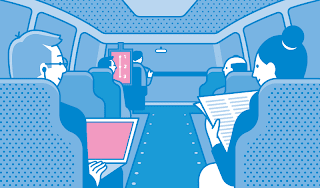 Customers can book a ride and travel from almost any
location to another within the service area of the bus. The booking and control
system is fully automated and all bookings are made over the internet or via SMS. Service level and price vary according to the customer’s
choices. If the customer accepts that the departure time is adjusted to
accommodate other passenger's and that the bus does not take the shortest route, the price is close to a regular public transport fare. If the customer
wants to get a ride immediately and take the shortest possible route, the price
is close to a taxi fare.
Customers can book a ride and travel from almost any
location to another within the service area of the bus. The booking and control
system is fully automated and all bookings are made over the internet or via SMS. Service level and price vary according to the customer’s
choices. If the customer accepts that the departure time is adjusted to
accommodate other passenger's and that the bus does not take the shortest route, the price is close to a regular public transport fare. If the customer
wants to get a ride immediately and take the shortest possible route, the price
is close to a taxi fare.
The Pilot
In the pilot phase the service is operated by 10 minibuses. In addition, the aim is to cooperate with the taxi industry. The pilot area includes parts of Helsinki that lie south of Ring Road I excluding eastern Helsinki. The Viikki campus and Otaniemi are also included in the pilot.
The preparation phase of the five-year pilot project will run until 2012 and the pilot will be carried out in 2012-2015.HSL will carry out the pilot in cooperation with the Finnish Traffic Agency, Aalto University, Ajelo Oy and Goodmill Systems Ltd.
The Equipment in the Vehicle
The vehicle equipment consists of a tablet computer which runs the application software. This has a critical connection to the backend system and updates the routes online as the rides change with new customers hopping in. The routes are shared on a bigger screen so that customers can see the route and their accepted arrival time just as in normal transport with predefined traffic plans. There is also a possibility for the WiFi hotspot and other customer experience enhancing services through the system.
The Technical Solution
The technical requirements for the solution include the ordering and billing system, the algorithm based route planning that uses GPS information and a very reliable broadband connection that exchanges information between the vehicle and the system. Additionally customer services, like reliable wireless hotspot can be offered for the passengers.
 The imperative for the successful operation is the
continuous GPS connectivity and the always online broadband to ensure that the
logistics algorithms are always calculated based on the correct updated information. It is thus possible to alter the route and optimize it for the
best possible customer experience. If the connectivity fails, the whole service is
dysfunctional. It is thus additionally important that the connectivity can be
monitored and all needed system set ups or upgrades can be done remotely. This
means updates to the routers as well as updates to the vehicle computer
systems.
The imperative for the successful operation is the
continuous GPS connectivity and the always online broadband to ensure that the
logistics algorithms are always calculated based on the correct updated information. It is thus possible to alter the route and optimize it for the
best possible customer experience. If the connectivity fails, the whole service is
dysfunctional. It is thus additionally important that the connectivity can be
monitored and all needed system set ups or upgrades can be done remotely. This
means updates to the routers as well as updates to the vehicle computer
systems.
The Future of DRT
Metropol project is one of the spearhead projects outlined in the letter of intent between the Government and Helsinki region municipalities aiming to enhance the competitiveness of the metropolitan area. HSL’s aim is to create a high-quality public transport service that will attract a substantial number of motorists to public transport.
If the system is widely introduced in the Helsinki region, the number of daily journeys made using the service could be in the hundreds of thousands within a decade. This would substantially reduce congestion from the use of private cars and need for large-scale road investments.
The Executive Board of HSL decided on 29 March to propose to the General Assembly of HSL that it would grant Ajelo Oy a subordinated loan of EUR 400,000, provided that HSL's member municipalities grant a corresponding loan to HSL. The municipalities are committed to finance the five-year pilot with around EUR 5 million, of which operating costs are around EUR 4.5 million.
Goodmill Systems Ltd. provides for the project the managed multichannel routing that is the enabler of this groundbreaking service. Goodmill offers the most reliable solution for vehicle broadband everywhere the connectivity plays a critical role.
The Service
 Customers can book a ride and travel from almost any
location to another within the service area of the bus. The booking and control
system is fully automated and all bookings are made over the internet or via SMS. Service level and price vary according to the customer’s
choices. If the customer accepts that the departure time is adjusted to
accommodate other passenger's and that the bus does not take the shortest route, the price is close to a regular public transport fare. If the customer
wants to get a ride immediately and take the shortest possible route, the price
is close to a taxi fare.
Customers can book a ride and travel from almost any
location to another within the service area of the bus. The booking and control
system is fully automated and all bookings are made over the internet or via SMS. Service level and price vary according to the customer’s
choices. If the customer accepts that the departure time is adjusted to
accommodate other passenger's and that the bus does not take the shortest route, the price is close to a regular public transport fare. If the customer
wants to get a ride immediately and take the shortest possible route, the price
is close to a taxi fare.The Pilot
In the pilot phase the service is operated by 10 minibuses. In addition, the aim is to cooperate with the taxi industry. The pilot area includes parts of Helsinki that lie south of Ring Road I excluding eastern Helsinki. The Viikki campus and Otaniemi are also included in the pilot.
The preparation phase of the five-year pilot project will run until 2012 and the pilot will be carried out in 2012-2015.HSL will carry out the pilot in cooperation with the Finnish Traffic Agency, Aalto University, Ajelo Oy and Goodmill Systems Ltd.
The Equipment in the Vehicle
The vehicle equipment consists of a tablet computer which runs the application software. This has a critical connection to the backend system and updates the routes online as the rides change with new customers hopping in. The routes are shared on a bigger screen so that customers can see the route and their accepted arrival time just as in normal transport with predefined traffic plans. There is also a possibility for the WiFi hotspot and other customer experience enhancing services through the system.
The Technical Solution
The technical requirements for the solution include the ordering and billing system, the algorithm based route planning that uses GPS information and a very reliable broadband connection that exchanges information between the vehicle and the system. Additionally customer services, like reliable wireless hotspot can be offered for the passengers.
 The imperative for the successful operation is the
continuous GPS connectivity and the always online broadband to ensure that the
logistics algorithms are always calculated based on the correct updated information. It is thus possible to alter the route and optimize it for the
best possible customer experience. If the connectivity fails, the whole service is
dysfunctional. It is thus additionally important that the connectivity can be
monitored and all needed system set ups or upgrades can be done remotely. This
means updates to the routers as well as updates to the vehicle computer
systems.
The imperative for the successful operation is the
continuous GPS connectivity and the always online broadband to ensure that the
logistics algorithms are always calculated based on the correct updated information. It is thus possible to alter the route and optimize it for the
best possible customer experience. If the connectivity fails, the whole service is
dysfunctional. It is thus additionally important that the connectivity can be
monitored and all needed system set ups or upgrades can be done remotely. This
means updates to the routers as well as updates to the vehicle computer
systems. The Future of DRT
Metropol project is one of the spearhead projects outlined in the letter of intent between the Government and Helsinki region municipalities aiming to enhance the competitiveness of the metropolitan area. HSL’s aim is to create a high-quality public transport service that will attract a substantial number of motorists to public transport.
If the system is widely introduced in the Helsinki region, the number of daily journeys made using the service could be in the hundreds of thousands within a decade. This would substantially reduce congestion from the use of private cars and need for large-scale road investments.
The Executive Board of HSL decided on 29 March to propose to the General Assembly of HSL that it would grant Ajelo Oy a subordinated loan of EUR 400,000, provided that HSL's member municipalities grant a corresponding loan to HSL. The municipalities are committed to finance the five-year pilot with around EUR 5 million, of which operating costs are around EUR 4.5 million.
Goodmill Systems Ltd. provides for the project the managed multichannel routing that is the enabler of this groundbreaking service. Goodmill offers the most reliable solution for vehicle broadband everywhere the connectivity plays a critical role.
Mar 7, 2013
Ambulance Broadband Data Connectivity
The modern ambulance services are
introducing a variety of life saving applications that require always online
broadband. Pirkanmaa Hospital District is one of the forerunners of high-end
applications in this field.
The Used Services
The hospital district needs to
chart patients and share data in real-time, and easily manage Ambulance Trauma
workflow and analyze patient data. Ultimately, the used applications help
hospitals realize significant clinical and operational benefits to improve
performance and quality. It is even possible to capture data using a finger
touch-screen interface, and make charting quick, accurate, and comprehensive.
The modern applications enable
hospitals and staff to see the status of all patients, including real-time
information from charting in the field. It is possible even to use workflow
management system allows agencies to manage EMS through review and approvals,
ultimately replacing the paper trail. The hospital district can then use
pre-built server reports and powerful data analytics package to observe trends,
and effect change.
Ambulances are outfitted with
docking stations and tablet PCs. Data is entered by tapping the screen,
including voice recognition. Paramedic can send patient data in real-time the
hospital and this system allows one to capture quickly and accurately far more
information than manual on paper charts. The patient data is then instantly
available to the emergency department and clinical audit staff.
The system naturally requires
data connectivity that is reliable, resilient and meets the challenging
coverage problematic of a big country like Finland.
The Router System
Pirkanmaa Hospital District has
chosen top of the field routing solution that is capable to switch from network
to another seamlessly in a matter of seconds. For guaranteed availability, the
routers system is remotely managed, and the solution includes state of the art
mobile IP capabilities.
The systems consist of routers,
including mobile terminals, router software, management software and tunneling
software. A picture of a concept set-up is presented below.

The figure shows that the hospital or command center can be connected to any
vehicle through secured IPSec based VPN’s through a VPN gateway. This VPN
gateway can be any of the currently commercially available standard gateways.
In case of high-end video surveillance, a special mobile IP server is needed in
the land site. This enables the extremely smooth switch over between networks
with very little influence to picture quality or delay in picture.
The WAN networks can be selected
freely based on the availability of mobile terminals that are integrated in the
router. In this case the most used Finnish Operators were selected to provide
for the best possible combined coverage. The selection of used alternative WAN
links is based on need for connectivity and cost. It is important to note that
the solution provides a smooth transition to future dedicated broadband
networks: when LTE is one of the selected modems, it will be used there where
available. As the LTE network coverage grows, the usability increases flexibly.
The services can be implemented immediately and upgraded as more broadband
capacity will be available.
Specific Solution Benefits
It is clear that the solution for
these lifesaving applications cannot be provided with standard routing systems.
There are requirements that need special attention and the router system is in
key position to provide for these. This includes for instance:
- Extremely quick switch over times through multiple active radio modems
- Data Session Persistency while using different network, for enabling real time applications such as Video and VoiP, as well as keeping critical data sessions open all the time
- Secure data communication through built-in VPN capabilities
- Auto roll back
- Double memories
- Fall back to previous working configuration is new one is corrupted
- Hardware based modem control
- In case of modem dysfunction the router has hardware power-up reset functionality
- Power back-up
- In case of power loss, like in starting the vehicle, the router keeps power on for app. 20-30 seconds.
The advanced management system is
essential in minimizing the implementation and operating costs as well as
maximizing the availability at all times during operation. The Goodmill
Systems’ management features and benefits include:
- Device management remotely
- Remote management via the active route/link, can be any
- All configurations administrated by the management system
- Monitoring
- Wan link status
- VPN status
- Configuration revision
- Router Log management
- Router firmware download and initialization
- Controlled remotely by the management system
- Recovery to earlier version if needed
- Mobile terminals managed and controlled by the system
- Secure and scalable installation
- Secure procedure to add devices under management
- Automated self-setup and configuration with remote management and predefined parameters
Summary
Using multichannel routing is the killer enabler that meets the current and future needs of data connectivity
in field use for Public Safety Sector. The solution enables the development of
services and functionality in vehicles that is only limited by the coverage and
data capacity limitations of the best availability that any single commercial
network provides. Our experience is that the session’s persistency and the high
availability needed can be provided only with our approach. The mobility of the
vehicle influences the network functionality in such a way that it excludes
currently available bundling solutions for this type of usage.
The high end implementation of
Pirkanmaa Hospital District system is a proof of the concept and the results
can be seen with improved service and ultimately saved lives.
Subscribe to:
Posts (Atom)